Burrowing Owl
The Burrowing Owl is a small owl with very long legs and a short tail. The throat is white, while the body is grayish-brown and spotted with white. The round…
The Burrowing Owl is a small owl with very long legs and a short tail. The throat is white, while the body is grayish-brown and spotted with white. The round…
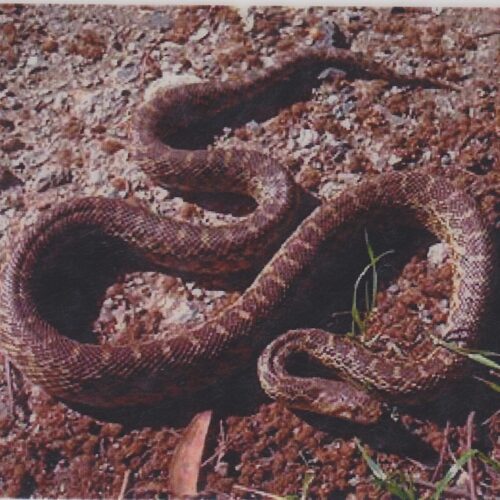
The Gopher Snake is yellowish brown, with dark, diamond-shaped markings. They can grow very large, often over 2 meters in length….
The Common (or Valley) Garter Snake is easily identifiable by a black body, yellow stripes down the back, and red blotches on the sides. The Western Terrestrial Garter Snake has…
…complex food webs sustain many larger species of birds, mammals, amphibians and reptiles. Most of the critters in vernal pools are native to California and many survive only in vernal…
…but the blood of any number of hosts. Ticks can feed on a variety of mammals, birds, reptiles, and amphibians. Here in California, the Western Black-legged Tick has been recorded…
Botta’s Pocket Gopher is tan to medium brown and often the color of the local soil. The gopher uses its short, powerful front legs and neck to “swim” through soil…
The Black-tailed Jackrabbit is grayish-brown with large, black-tipped ears and a black streak on the top of its tail. Its long hind legs help it to run 30 to 35…
The Coyote is gray with reddish-gray legs, feet and ears and a whitish belly. Its tail is bushier and nose more pointed than most dogs. It makes high-pitched “yaps” and…
The California Vole is covered with grayish-brown fur. Its ears and legs are short and it has pale feet. It has a cylindrical shape (like a toilet paper roll) with…
The Western Spadefoot is small and squat. Its back is olive-brown or gray with dark blotches and little red bumps. The skin on its back is mostly smooth, unlike that…